Your players, your money, our sportsbook
A full betting interface — line, live, markets, bet slip, history — added to a site you already run. The part that usually makes this a two-year project is the part you keep: accounts, balances and payouts never leave your backend.
Every part of it, named — and in your colour
Hover any region and the rest of the interface steps back. Then pick an accent: every frame is the same running widget, repainted. Nothing on this page is a mock-up.
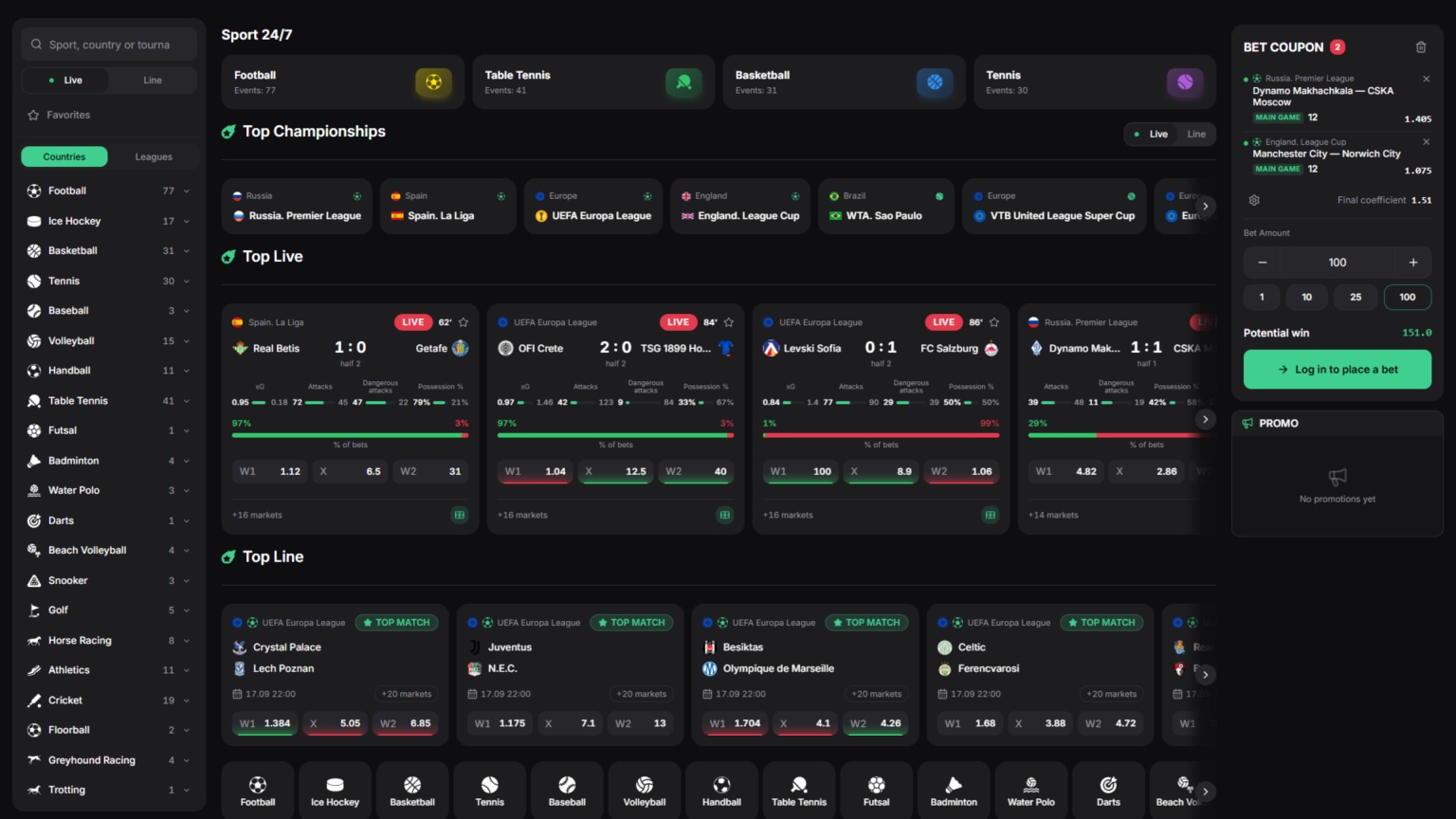
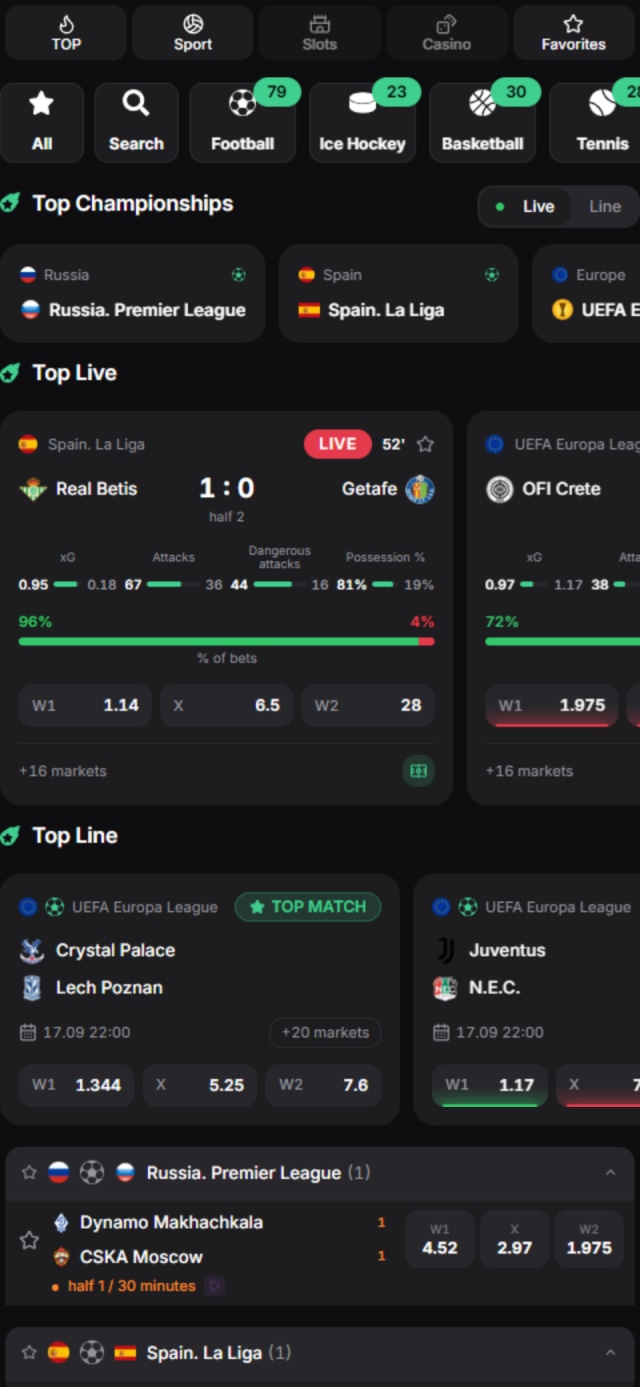
- 01Sports and countries — The whole catalogue, counted live, collapsible down to a single league.
- 02Sport tiles — Event counts per sport, so the busiest board is obvious before the first click.
- 03Top championships — The competitions worth surfacing, kept ahead of the long tail.
- 04Live cards — Score, minute, xG, attacks, possession and the share of bets — on the card, not a click away.
- 05Pre-match line — Tomorrow's card in the same grid: kick-off time, headline markets and the full market count.
- 06Bet slip — Singles and accumulators, stake and return, accepted through your own backend.
What arrives with the script
Not a component you finish building. The feed, the pricing, the slip and the settlement are already wired to each other.
Line and live
Prematch and in-play in one interface, with the markets and prices already attached to the events.
A working bet slip
Singles, accumulators, stake entry and potential return — accepted and settled without you writing any of it.
History and news
Players see their own bets and their outcomes. Nothing to build, nothing to reconcile.
One script tag
Three lines on the page. The widget resolves your project by domain; no build step, no package to install.
The money never leaves your side
This is the question every bookmaker asks first, so here it is plainly. The widget uses your session — you pass a token, we never create one. When a bet is placed, the platform calls a webhook on your backend to check the player and move the stake. Balances, payouts and KYC stay where they already are.
- You pass a player token; the widget never stores or issues sessions
- Every stake and payout goes through a webhook you control
- Your domain is registered; a foreign page cannot embed the widget
- The token travels by postMessage — never in a URL, a log or a Referer
<main id="bet-widget"></main>
<script src="https://<platform>/embed.js"></script>
<script>
  $line.init({
    container: '#bet-widget',
    token: '<your player session token>',
    lang: 'en',
    type: 'live',
  });
</script>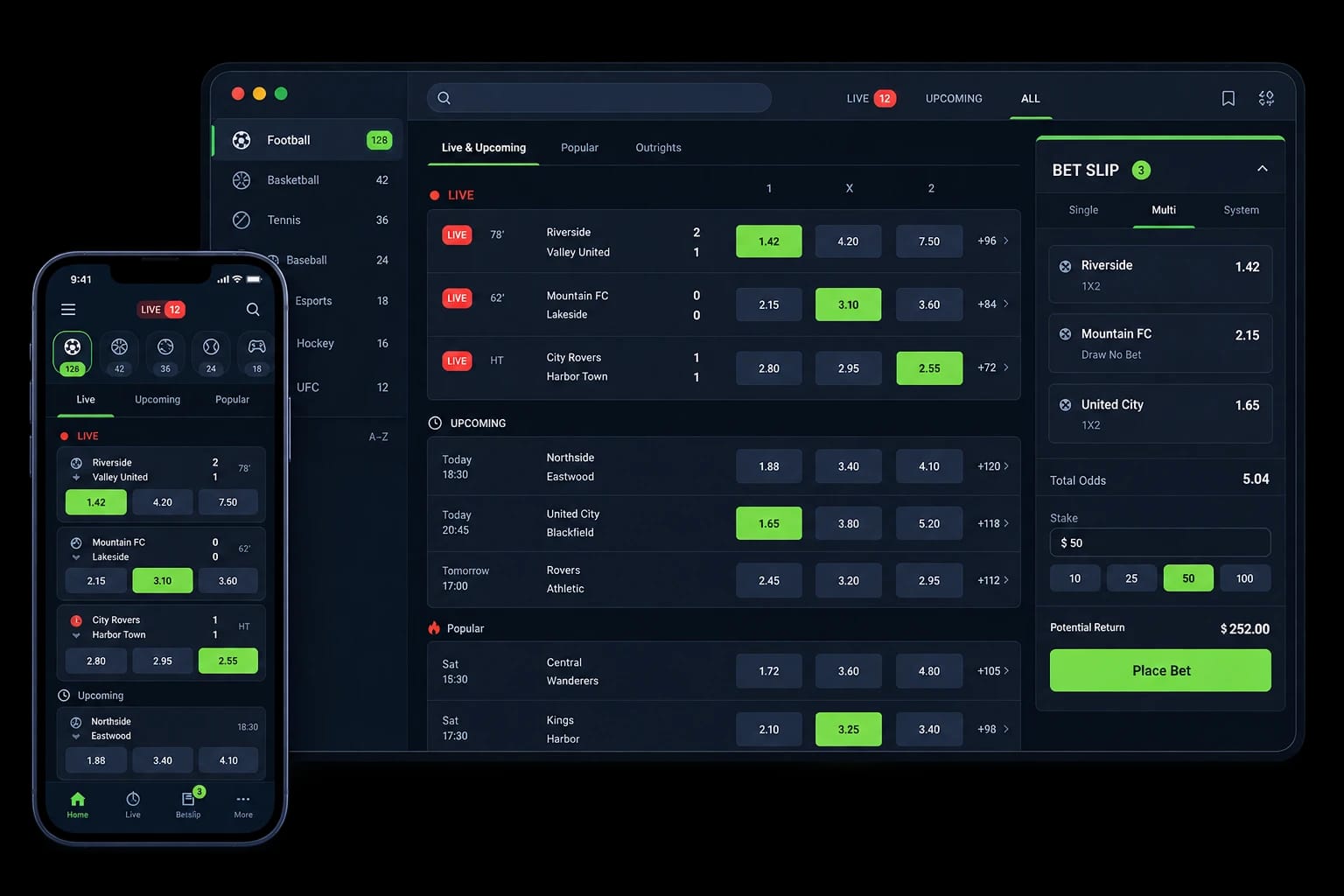
Take the window, or build it yourself
The widget is the fast route. The API is the flexible one. Most people who compare them properly pick on how much interface they want to own, not on price.
Live in days rather than quarters, with nothing on your side to build.
- $999 once, to install and connect your backend
- $999 a month for the first six months
- After month six — revenue share on agreed GGR
- Line, live, markets, bet slip, history and news
- Your session, your wallet, your players
For teams who want the interface to be theirs down to the last pixel.
- SPORT+ — $299: line, live and odds across 10 sports
- COUPON BASE — $359: bet acceptance and settlement
- Your interface, your rules, your release schedule
- More work up front, no ceiling afterwards
The questions that come up
Why the price is split in three
A sportsbook widget is usually priced as a flat monthly fee, and that arrangement quietly favours whoever is selling it. The fee is the same whether the live section earns or sits there, and the supplier has no reason to care which.
The split here is meant to fix that. The $999 install covers the part that is genuinely one-off — connecting your backend, registering the domain, walking your developers through the webhook. The six months at $999 cover the ramp, while the section is finding its traffic. After that the arrangement moves to a share of agreed GGR, which means our upside and yours start pointing the same way.
What you should compare it against is not another widget but the alternative on the right: buying the line and the coupon engine and building the interface yourself, from $658 a month. That route is cheaper in subscription and far more expensive in time. Which one is right depends on whether the interface is your product or just the thing in front of it.